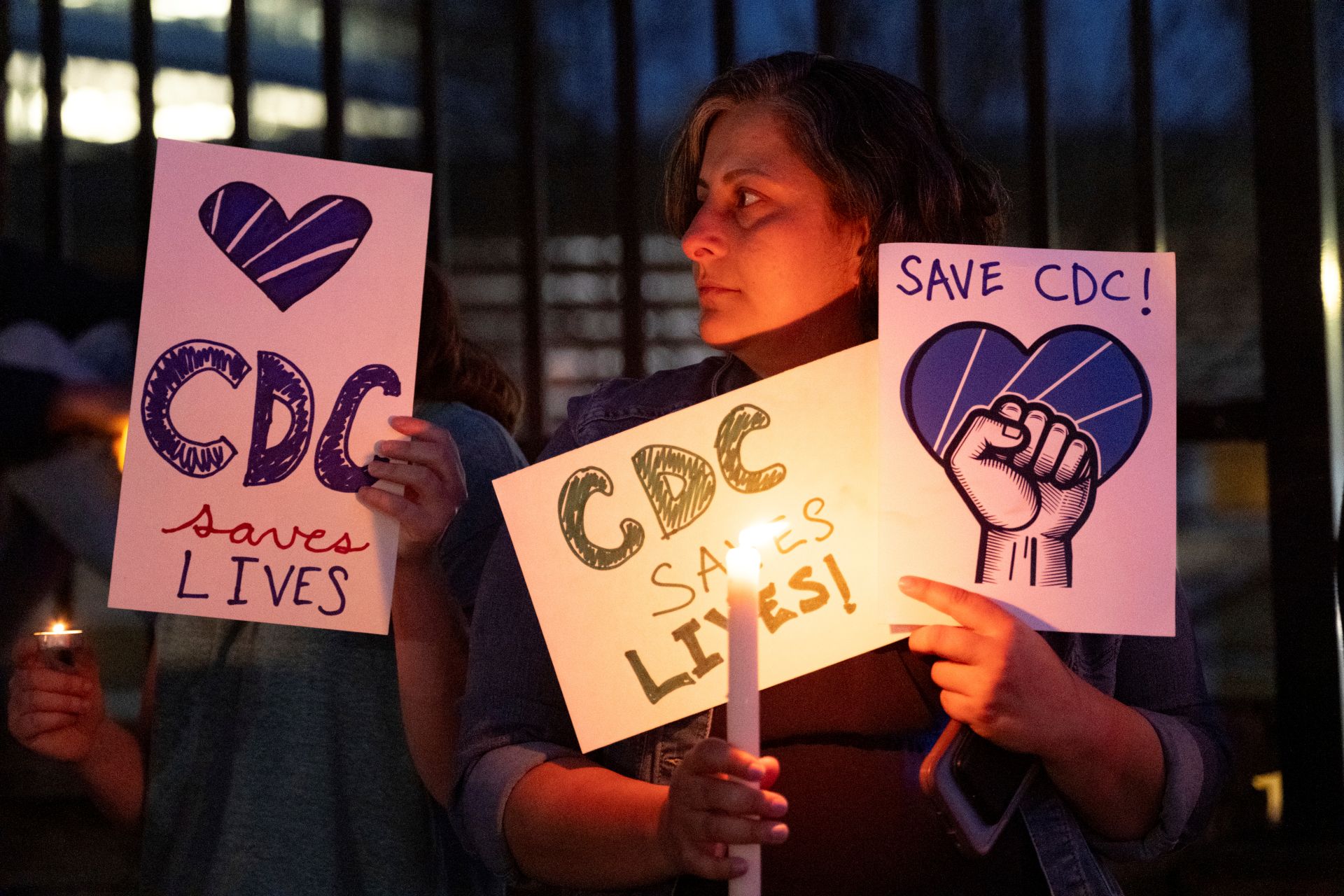
U.S. President Donald Trump’s second administration has moved quickly to defund and dismantle key U.S. regulatory agencies, including the Centers for Disease Control and Prevention (CDC), the Food and Drug Administration (FDA) and the Environmental Protection Agency (EPA).
It has cut funding, cancelled programs and fired workers, dismantling decades of work regulating public health, the environment and food safety, among other areas. Instead of producing scientific knowledge, the regulatory agencies are instructed to reflect the Trump administration’s ideologies, including false claims about Tylenol.
Worse, the fallout from this wanton destruction is not confined to the United States. Every country, including Canada, which relies upon U.S. data and regulations to inform its policymaking and regulatory efforts will be affected. Canada will also be hurt by the U.S. government’s attacks on scientific knowledge relating to weather, climate, the environment, the economy and space.
To protect its citizens against this growing danger, Canada must build greater internal regulatory capacity and forge partnerships with other like-minded democratic countries.
That requires spending more money, not making cutbacks on the number of public servants, as the Mark Carney government announced in its November budget. Although each federal department is responsible for finding its own cuts and although none have announced specific measures, the danger is obvious if there are fewer staff to cover the U.S. regulatory gaps.
U.S. public health system under attack
The effects of the Trump government’s war on science are already evident. In November, the CDC reversed its longstanding factual statement there were no links between vaccines and the development of autism. The CDC’s website now contains the false claim that “studies have not ruled out the possibility that infant vaccines cause autism.”
Health Secretary Robert F. Kennedy Jr. has stated that he personally ordered the change. Public health advocates say the new approach means the CDC can no longer be trusted.
Kennedy’s vaccine advisers also voted in September to weaken the childhood immunization schedule, calling for two separate shots instead of combined MMRV vaccine for measles, mumps, rubella and varicella (chicken pox).
These changes are not trivial. They are a fundamental break from decades of public health policy. Experts, who recommend combined vaccines, worry that these changes will cause some parents to delay or skip vaccinations.
Then, earlier in December, a panel that Kennedy appointed removed universal hepatitis B vaccine recommendations for U.S. infants.
In Canada, misinformation and denialism about vaccines are among the reasons the country recently lost its measles elimination status – a distinction it held since 1998 – after it was unable to contain repeated outbreaks, especially in Alberta and Ontario, for more than 12 months.
With anti-vaccine misinformation and denialism now reflected in official U.S. policy, Canada can expect similar problems here. A likely outcome is more people delaying or avoiding vaccinations altogether. Public trust in, and access to, factual medical information and family doctors are essential because Canada is also experiencing rising rates of syphilis, HIV and tuberculosis, along with the ongoing measles outbreaks.
Canada’s health agencies heavily rely upon American institutions for tracking infectious diseases, including avian flu and tuberculosis, as well as dealing with pandemics. Therefore, cuts to the U.S. health-care system pose “immediate and long-term risks to the health of neighbouring countries and to global health,” according to a July editorial in the Canadian Medical Association Journal.
In addition to disease tracking, Canada relies upon the FDA for ongoing monitoring of pharmaceuticals and medical devices for safety issues – a practice termed post-market surveillance.
“They just have vastly more resources. The chances of us picking up something before the U.S. are very slim,” says Matthew Herder, a professor of law and medicine at Dalhousie University, who specializes in the regulation of pharmaceuticals. “If we’re losing the oversight that the FDA offers globally or losing even the percentage of it, that is really terrifying.”
American food system risks may spill over to Canada
The U.S. food system is also in danger because of deep cuts and job losses at federal agencies that oversee food safety, including the FDA, the Department of Agriculture and the CDC. The cuts mean fewer inspections of food and decreased tracking of food-borne diseases, as well as decreased monitoring of outbreaks of invasive pests and disease, such as the avian flu outbreaks at poultry and dairy farms across the United States.
Food safety experts warn that U.S. federal cuts will result in uneven enforcement at the state level, a higher risk of contaminated food reaching the U.S. market, especially in the meat and poultry sectors, and slower response to problems.
This is particularly important for Canada, given that more than half of the country’s agri-food imports originate in the United States. The two countries have a longstanding agreement that recognizes each country has a comparable food safety system, meaning U.S. food imported into Canada is less likely to be flagged for inspection.
ONGOING COVERAGE: A Stronger Canada for the Trump Era
Carney’s “nation-building” is nothing but a blast from the past
Today, however, Canadian regulators should evaluate whether the U.S. system remains adequate.
The Canadian Food Inspection Agency (CFIA), recently created a “U.S. risk task team.” Its purpose is to monitor the impact of American regulatory changes on food imports. The CFIA warns that U.S. cuts to safety measures can expose Canada to “various risks such as contamination, diseases, [and] pests,” according to internal documents received through access to information requests.
The CFIA notes that it will need to be proactive in identifying risks, collecting and sharing information, and taking regulatory action.
More resources, not fewer, needed
Health experts are calling on Canada to strengthen its public health and disease surveillance systems, which requires better resourcing at both the provincial/territorial and federal levels.
The federal government also needs to consider how health regulators can undertake effective post-market surveillance of pharmaceuticals and medical devices with decreased support and perhaps unreliable information from U.S. regulators.
Similarly, safeguarding Canada’s food safety systems will require greater funding from both federal and provincial governments for regulators to carry out more risk assessments and greater inspection of food products from the United States.
Therefore, this is not the time to gut the federal public service through the Carney government’s spending cuts because it risks endangering Canadians’ lives and irreparably harming the integrity of our public health and food safety systems.