With the close of the Francophonie Summit I had to face the alarming fact that the end point for a successful conclusion to the free trade talks was only a month away, with a deadline of October 3, at midnight. US negotiator Peter Murphy still hadn’t revealed anything worth Canada’s while in regard to our key demand: a binding dispute resolution system. President Reagan had already heard about this issue directly from me, so I directed Derek Burney to approach his American counterpart at the White House.
Derek did so, sending a letter to Reagan’s chief of staff, Howard Baker, on September 8. “We do not see a binational dispute settlement mechanism as a concession either side makes for the other,” Derek wrote. “Rather, we see it as the sine qua non, politically and objectively, to make the agreement whole, i.e., to preserve the rules and disciplines against all other political considerations. It is that basic and it is that important. I want to stress that there is no possibility of our concluding a deal which does not include a genuine and objective basis for settling disputes arising from the agreement’s rules. If it is your judgment that the administration cannot meet our requirements on the issue which I believe goes to the heart of the negotiations, it would be prudent to know soon so that we may take appropriate action. (I would note here that the prime minister will meet all ten Canadian premiers to review these negotiations on September 14.)”
Howard Baker replied three days later, saying that the administration wouldn’t admit the talks could fail. “Our negotiators are meeting today and through the weekend, and we fully expect progress from those sessions. We ought to be talking instead about how to construct this historic arrangement and thereafter present it to the Congress, Parliament, and people of both countries. Derek, these talks will succeed or fail on the merits of proposals. But, however, should these talks reach a stalemate, I can assure you that it will not be due to a lack of attention of the president or his senior advisors.”
The October 3, 1987 deadline for the president’s use of “fast-track” negotiating authority— meaning approval or rejection but no amendments— eventually focused political minds in both capitals. The run-up to that deadline during September was the most hectic and emotionally charged roller coaster of any month during my nine years in office.
A series of special committee and full cabinet sessions in early September had revealed clearly to us all that the negotiations were at a standstill, in large part over Canada’s demand for relief from arbitrary American trade remedy decisions. Equally, our negotiators had refused to budge on the bottom-line concern of the US team: some easing of Canada’s investment review decisions. Concerns around the cabinet table about the prospect of a failed negotiation were tempered somewhat by those with lingering apprehension about the political implications of a positive outcome. In other words, quite a few members of my cabinet would have been pleased to see the talks fail— Minister of Agriculture John Wise had strong reservations about any moves away from traditional Canadian support mechanisms for parts of our agricultural sector (especially dairy and poultry), although these concerns were more than matched by those of his American counterpart. Some have suggested that “agricultural trade” is the ultimate oxymoron in trade negotiations; reluctance to give ground on agriculture policy bedevils multilateral trade negotiations to this day.
Flora MacDonald often exemplified the historical reservations about free trade within Conservative ranks. She showed me a cartoon from the 1911 campaign to underscore how long-standing Tory sentiment against free trade had been. “No truck or trade with the Yankees!” had been Borden’s rallying cry in the 1911 election. Her responsibilities as minister of communications, which included culture, gave her more immediate concern. Our negotiators had addressed this issue up front by eliminating culture from the negotiations and yet, to the Americans, what Canada saw as manifestations of culture— magazine, film and publishing policy, postal rates, and so on— the United States saw as business. That ambiguity, and the fact that the US had GATT rights that prevailed in any event, served a useful purpose. We knew that even a complete exemption would not assuage the cultural lobby. Ironically, even many Canadian artists who performed south of the border insisted on being exempted from travel provisions that would have eased their entry to perform in the US market.
Around the cabinet table Mike Wilson, John Crosbie, and Don Mazankowski were steadfast supporters of the negotiating process. By contrast, even though she was the minister of international trade, Pat Carney wavered from time to time, depending on her mood of the moment. In his memoirs, No Holds Barred, Crosbie refers to “Carney’s difficult personality,” and her discomfort with Simon Reisman’s prominent public role seemed, on occasion, to undermine her judgment.
I had chosen Simon as our chief negotiator because of his extensive experience in trade negotiations, most notably with the Auto Pact, and because I knew he was more than capable of standing firm on Canada’s behalf. Lester B. Pearson had described a constant problem facing any Canadian in Simon’s position. “The picture of weak and timid Canadian negotiators being pushed around and brow-beaten by American representatives into settlements that were ”˜sell-outs’ is a false and distorted one. It is often painted, however, by Canadians who think that a sure way to get applause and support at home is to exploit our anxieties and exaggerate our suspicions over US power and policies.
Fortunately, the adjectives “weak” and “timid” do not apply to Simon Reisman, as anyone who has encountered him will attest. My instructions to him and the negotiating team had been explicit from the beginning. We needed an agreement that would provide conditions that were significantly better for Canada in the American market than the status quo. Equally, no deal was better than a bad deal.
In 1986 a severe protectionist chill had swept through Congress like a bitter November wind, threatening our access to our most important markets. A high percentage of our exports to the United States were subject to quotas, “voluntary” restraints, and other restrictions. As I had told the Commons, the Ottinger Bill, passed in three successive years by the House of Representatives, sought to destroy the Auto Pact, which lay at the heart of Ontario’s economic power. There was a crisis a month for Canadian exporters as trade barriers were erected against their products. The Americans also demanded preventive action against Canadian steel, uranium, cement, subway cars, fish— in fact, virtually all of our exports south of the border.
In one well-known specific case, Canada had been hit with restrictions on sales of cedar shakes and shingles and, faced with similar action against our even more substantial softwood lumber exports, had concluded a managed trade” truce whereby a 15 percent export sales tax was attached to our sales to the United States for a five-year period. This had the advantage of at least keeping the extra revenue in Canadian, not US Treasury, hands. Other sectors of our export economy faced similar pressures, either directly or indirectly. Even when Canadian products were not specifically targeted by American trade remedy measures, they risked, as in the case of steel, being side-swiped by actions aimed at others.
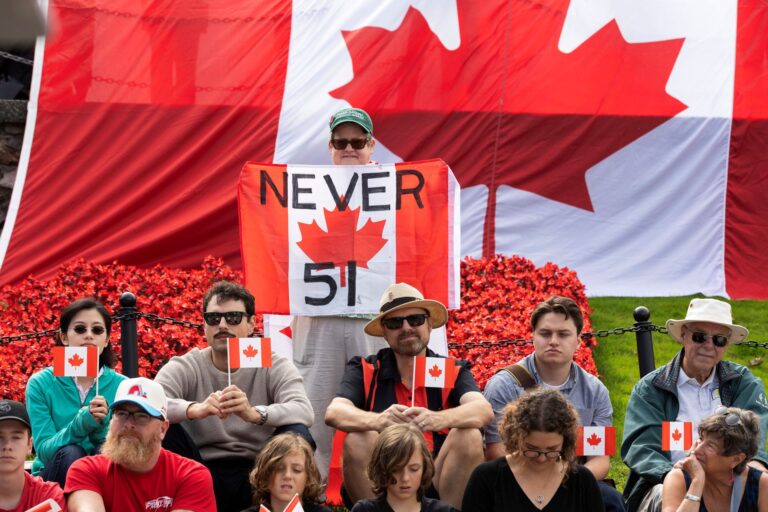
That is why the defensive aim of securing existing access to the US market became as vital an objective for our negotiators as the benefits to be derived from more liberalized, tarifffree access. It was ironic that Ontario, the province with the most at risk on the former objective and the most to gain from the latter, was represented by a premier, David Peterson, who was, at best, ambivalent over the negotiations. Nationalist, anti-American sentiments provided a more basic inclination to oppose this major policy initiative of my government, and those sentiments flourished, particularly in Toronto, under the persistent drumbeat of the Toronto Star and the CBC, implying that if we successfully signed the deal, it would make Canada the fifty-first state. The coverage from the Globe and Mail was balanced, and the editorial view supportive of our initiative.
As the negotiations progressed, I arranged several briefing sessions with first ministers. While I was careful not to confer veto rights to any or all premiers and to preserve the federal constitutional authority for trade negotiations, I recognized that some elements of the negotiations (such as procurement, liquor boards) involved provincial jurisdiction. I also recognized that there was more general support than opposition from the premiers for the initiative, and knew that this would be helpful politically down the road. The strongest supporters were Bourassa, Getty, Vander Zalm, Devine, Hatfield, and, to a lesser extent, Peckford and Buchanan. Pawley and Ghiz were opposed, while Peterson, as mentioned, was ambivalent at best.
From September 2 to October 3, 1987 there were 22 meetings of the Trade Executive Committee (TEC), the Priorities and Planning Committee, and the full cabinet (and those are only the ones for which records exist). There were also many ad hoc meetings, regular preparations for question period, and discussions with the Americans (formal and informal) about the negotiations that added to the drama and tension. It was, as far as I was concerned, all free trade, all the time
I had announced in March 1987 that the government was committed to protecting Canada’s social programs, capacity to promote regional development, auto industry, agricultural marketing systems, and cultural identity. Concerns about each of these, and frustration over the uncertain pace of the negotiations, dominated cabinet discussions.
That frustration came to a head in mid-September when, after 18 months of negotiation, it became evident that the United States was neither sensitive to the political risks facing my government nor committed to act on what I had characterized as the sine qua non for success: relief from capricious US trade remedies. Despite assurances from President Reagan about the importance of the negotiations, there was little evidence of political commitment in Washington. The 10–10 vote by the Senate Finance Committee in April of 1986 to launch negotiations had almost derailed the initiative before it began and had served as an omen for the negotiating process as a whole.
Peter Murphy was an able enough negotiator but, without a political champion above him in the administration, he concentrated on “irritants” identified by officials from various US agencies or key congressmen, and gave lowest common denominator replies to Canadian overtures. On more than one occasion, I observed to cabinet that “if the US administration spent one-tenth of the time on Canada that they do on Nicaragua, we’d have a deal.” The problem was that no one was in charge in Washington. Clayton Yeutter, the US trade representative, was preoccupied with other issues, fending off pressures from Congress in implementing the 1986 Omnibus Trade Bill. Joe Clark tried persistently to engage George Shultz, but he, too, had other priorities.
Ambassador Allan Gotlieb was in the midst of this, and his Washington Diaries catch the sense of impending failure that had taken hold by midSeptember. On September 15, with only eighteen days to the deadline, he wrote about an Ottawa meeting in the PMO boardroom with Don Mazankowski, Joe Clark, Michael Wilson, Pat Carney, Paul Tellier, Stanley Hartt, Gerry Shannon, Gordon Ritchie, Simon Reisman, and myself. The meeting was chaired by Derek Burney. “The atmosphere was grim,” recalled Gotlieb. “Reisman gave a gloomy report on the negotiations, and I gave a gloomy report on the Washington political atmosphere. Apparently, what I said to the prime minister last week about the need to create a crisis is what prompted him to call this meeting. I repeated my advice: Reisman, on instructions, should break off the negotiations. To use my term, we should apply ”˜electric shock treatment.’” In an earlier private meeting with me in my office in September, Gotlieb had seen how angry I was with the American negotiators. In his diary he wrote: “Mulroney is bitter about this. If the United States turns their back on us, they’ll feel our wrath, he said…The prime minister was talking more loudly than I can remember him doing before, although we were the only two in the room. He stood up, so I did too, and we remained standing throughout our discussion. I could feel the intensity of his wrath. He stood more and more closely to me as he spoke.”
Clearly, we had to attract Washington’s attention.
Secretary of Treasury Jim Baker was known widely as Washington’s “go-to” guy. I sent Derek Burney and Mike Wilson to meet with Baker informally on September 19, during the annual International Monetary Fund meeting in Washington, to urge movement on the issue of relief from trade remedies. I had asked Derek to express to Baker my concern that the United States seemed more able to conclude an arms agreement with the Soviet Union (SALT II) than a trade agreement with its closest neighbour and ally. This seemed perverse to me. To the customary lament that “Congress would never buy” an agreement giving Canada relief from their trade remedy actions, my attitude was that the administration should “take a chance” with Congress, nonetheless. If Congress voted it down, so be it. After all, our negotiation was with the administration.
Although our message may have registered, Baker suggested only that the negotiators “deal with the underbrush,” in other words, clear up the noncontentious issues as a way to maintain momentum. He may have been reluctant to upstage his cabinet colleague, Yeutter (Pat Carney’s counterpart). In any event, Baker did not get involved at that time.
It was increasingly evident that the United States was assuming that Canada was prepared to accept any deal, however bad, in order to claim success. We had to disabuse them of that notion before we could expect any movement on the issues of greatest importance to us.
Throughout September the prospect of failure loomed ever larger. While for some around the cabinet table that spelled relief, the overall mood in the room was sombre. While walking away from a deal that failed to meet our twin objectives had shortterm appeal, there was a definite political, as well as an economic, downside to a failed negotiation. As I explained angrily to cabinet, we were “being killed by indifference,” with no one in Washington paying much attention to the negotiations. But if we were to pin the failure on a lack of focus or priority in the US administration, that would simply underscore to our critics that the Americans were indifferent to a Canadian government committed to improving relations.
I knew we needed something to break the stalemate. At the September 22 TEC meeting, with the deadline only eleven days away, we set the stage for Simon Reisman to walk away or to suspend negotiations should there be no movement on trade remedies. Until then, negotiations had concentrated on possible definitions of allowable or non-allowable subsidies and some form of dispute settlement as a means to temper American actions against Canada. Most of the ideas came from the Canadian team. To that point, reactions from the US had been both uncompromising and unpromising. I indicated to the TEC, and later that week to full cabinet, that “barring a miracle, the enterprise has collapsed.” While I had not given up, I wanted everyone to be ready for the worst.
At one o’clock in the afternoon on September 23, Reisman walked away from the table.The pace quickened dramatically after that, and the focus shifted to the highest political level in both capitals. The Americans suspected initially that our action was simply a bluff or ploy. On September 24, Gotlieb’s diary records: “[Senator] Chafee told me that our walkout was being interpreted by his colleagues on the Hill as a sign that Mulroney is weak— frightened of an agreement. How wrong can they get?” To kill that idea, Derek Burney was instructed to discourage Howard Baker from arranging a president-to-prime-minister telephone call, unless the Americans had something tangible to propose on trade remedies.
The minutes of the cabinet trade executive meeting for September 24, at 8:30 a.m., catch the emotions of that time: “[Pat Carney] noted that the current impasse would not be unwelcome to a number of cabinet ministers. She said that relief seemed to be the dominant feeling among her colleagues, and that there was not much will to continue. The prime minister responded that he was aware of this, and that he knew who the relieved colleagues were.”
Jim Baker called Derek on September 24 and hinted that something along the lines of Sam Gibbons’s proposal on dispute settlement might be the basis for a solution on trade remedies. The next day, however, presumably after some soundings with Congress, Baker backed away from any reference to Gibbons.
Gibbons, a Democrat from Florida, was the chair of the House Ways and Means Subcommittee on Trade. He had proposed that the application of the two countries’ existing trade remedy instruments (antidumping, countervail, and so on) be subjected to binding dispute settlement by binational panels. His concept had not been fleshed out either in detail or actual practice. Nonetheless, it had the beauty of simplicity and, most importantly, would involve no onerous adjustment or new restrictions on Canada. All attempts at common definitions or “safe harbours” for subsidies had foundered, primarily because the implications for Canada would have been more severe than those for the United States. Because so much of what Canada produces has a trade dimension, unlike the US with its massive internal market, any measure to modify subsidies or other supports to industry would have been much more restrictive for Canada. Gibbons’s formula would, in effect, substitute binational panels for the more costly recourse to the US courts, where decisions were not necessarily less arbitrary than those of their trade tribunals. The advantage of Gibbons’s idea was that Canadians would be directly involved.
Gotlieb’s diary entry for September 25, 1987 begins, “Everyone is scrambling to put Humpty Dumpty back together again.” There were eight days to go.
On Saturday, September 26, the US administration sent a two-page proposal attempting, once again, to define subsidies that would be permissible (“safe harbours”) along with imprecise dispute settlement procedures. This proposal also featured the customary American wish list of higher thresholds for investment reviews and a series of irritants (such as beer, wine, pharmaceuticals) that Simon Reisman characterized as “scalps” intended to placate individual Congress representatives. Our team reacted coolly to this overture but sent a neutral response in order to avoid being blamed for failure. We were acutely sensitive to the record of events at this stage, wanting to be sure that the reasons for failure were defensible, especially to those who were counting on success from the initiative. I personally drafted the last paragraph, stressing to Baker the importance of his own role if a deal was to be achieved.
Despite a flurry of messages back and forth with Washington, and heroic individual efforts by Gotlieb, the prospects seemed dimmer as the month drew to a close. In Ottawa our emphasis moved to securing an honourable disengagement as opposed to producing new ideas to keep the initiative alive.
At the TEC meeting September 29, the consensus was that we should “play out the game” (assuming failure), and this set the stage for a discussion at the Priorities and Planning Committee later the same day. At this meeting, I asked Derek to give a balance sheet account of where matters stood. Derek was not only involved in frequent briefings from our negotiating team, he was also in regular, direct contact with the US administration. After recounting the pluses and minuses for each side, and assuming a breakthrough of some kind on dispute settlement, bearing in mind that we sought “better access” and “a shield against US protectionism,” Derek stated that the net result would be a decided plus economically and politically for Canada, but not an easy sell. He rated the prospects of a successful negotiation as“3or4outof10.”
Pat Carney immediately challenged Derek’s assessment. As “devil’s advocate,” she said that Canada risked “losing control of our economy, over regional development (like Hibernia), and would fall into US line on films, videos, and so on.” She added that what she saw would be “an exceptionally marginal deal in political terms.” I invited other ministers to speak, and then summed matters up, saying I would rely on Derek to negotiate in good faith and determine whether the US would meet our bottom-line objectives.
On that basis, I dispatched Derek Burney, Michael Wilson, Stanley Hartt, and Pat Carney to Washington on October 1 to signal clearly and firmly to Secretary Baker and Ambassador Yeutter that Canada was not prepared to accept any deal, and that “the deal we want, we do not see; the deal we see, we do not want.”
Essentially, the Americans had proposed that we conclude a deal on the removal of tariffs— the key element of any free trade agreement— and leave the thorny issues like trade remedies and investment for a later date. We had concluded that this would not be good enough because our tariffs, on average, were slightly higher than theirs, so we had more to give than to get. That would not fly politically in Canada, even though, in economic terms, it would give a strong competitive impetus to our manufacturing sector. In fact, as I knew too well, any agreement between Canada and the United States risked being seen in Canada as more advantageous to the Americans. Before leaving for Washington, Derek received an intensive briefing from the Trade Negotiations Office (TNO) team and, on my instructions, had individual sessions with ministers like John Wise (Agriculture), Flora MacDonald (Communications), and Tom Siddon (Fisheries), whose concerns about the negotiation were the most acute.
On hearing Burney’s crisp response, Jim Baker and others in the administration realized that they were staring failure in the face. And that, not surprisingly, is when Baker really decided to take charge. We assumed from the outset that relief from Canadian investment review provisions would be a major US objective in the negotiations and, as secretary of treasury, Baker was responsible for investment policy. Investment and trade remedy instruments became the ultimate trade-offs we could offer to the negotiation, but the prospects for success were elusive up until the very last moment.
Pessimism was in the air everywhere. Gotlieb’s diary entry for October 1 reads: “It is…two years since Mulroney first proposed a free trade agreement with the United States. But we’ve reached the end of the road…
I know Mulroney does not want this agreement to fail. But he has been let down by the Americans and to a large extent his own cabinet.”
Writing in the Globe and Mail, Hugh Winsor summarized the mood, saying, “A quiet but honourable death of the Free Trade negotiations may not be all bad.” I told Parliament that “the bottom line remained the same. This deal shall be in the national interest or there shall be no deal.” In Quebec City on September 30, I had said, “If the US persists in its refusal [to deal with trade remedies], it looks bad. But I think we had to try because it is in the best interests of Canada and Quebec.”
Our group returned to Ottawa shortly after delivering our message. All were now thinking of damage control.
Later that evening (October 1), Baker called Derek Burney and asked explicitly whether the Gibbons formula on dispute settlement would be a basis to restart negotiations. I subsequently learned that, after our delegation had left Washington, Baker had taken several soundings with key senators on the Finance Committee and, while he had been skeptical initially, had concluded that the Gibbons formula just might fly.
Burney and Wilson asked to meet urgently with me that evening at 24 Sussex. They explained what they thought that the Gibbons formula meant and counselled that it was at least worth a further negotiating effort. I agreed and instructed them to resume full negotiations the next day in Washington. In effect, I charged Derek with the responsibility of securing a good deal if such were possible. If not, he was to try to bring the talks to an honourable conclusion.
As soon as they returned to Washington the next day (October 2), our delegation team— this time, Wilson, Burney, Carney, Reisman, and Gotlieb— discovered that they were not out of the woods yet. The devil, as they say, can be in the details, and we had few details at this point on the Gibbons formula, or anything else in the agreement.
Apart from confusion about the manner in which the formula would work, the second hurdle to overcome in the negotiation of Gibbons was how best to guard against unilateral changes being made to existing trade remedy rules by either party. On that, the best that could be obtained, over and above the application of prevailing GATT rights, was that Canada had to be specifically named in any new trade remedy legislation. What this did, in effect, was prevent Canada from being side-swiped by measures directed primarily at others. The Gibbons formula was to be in effect for seven years, while efforts to define subsidies continued. (In the absence of agreement on definitions, the formula actually became permanent in NAFTA, and was essentially emulated in the World Trade Organization Uruguay Round Agreement on Dispute Settlement.)
October 2 was a very long day for our team as they worked through the massive agenda from more than two years of negotiations, attempting to isolate areas of agreement and disagreement, and discussing with their US counterparts how best to handle the latter. Gaps in perceptions about the Gibbons formula were very obvious. It was an equally long day for those of us standing by in Ottawa, receiving regular briefings from our team.
Midnight, October 3 was the real deadline for the US administration to signal its readiness to enter negotiations under the fast-track authority and it proved to be a day of highs and lows like no other. The “Elements of Agreement” were beginning to take shape and, in an early evening call, Burney reported by telephone good progress on many fronts. An agreement on dispute settlement, however, was still much less certain. I urged Derek to impress on Baker again that the administration should “take a risk for Canada with Congress.” What was unacceptable was an administration that would not fight for a good agreement, which was counter to the basic approach that my government and I had adopted in dealing with Washington. I reserved the right to call the president in the event the negotiations foundered on the key dispute settlement element.
At 9 p.m. the Canadian negotiators in Washington took a poll: they were unanimous. The deal was off. Derek phoned to tell me so.
I made arrangements to leave Harrington Lake and proceed to the Langevin Block to brief key ministers and later the media. When Derek called at about 9:30 to warn that a comprehensive deal appeared unlikely, I told him to advise Baker that I would be calling President Reagan at Camp David to put the following question: “Ron, how come the Americans can do a nuclear arms limitation deal with their worst enemies, the USSR, but can’t do a trade deal with their best friends, the Canadians?”
Derek immediately met with Baker. According to Gotlieb, “Burney went back to see Baker alone to convey the news that the grand game was terminated and that we had failed. Our decision seemed to come as a thunderbolt to Baker. He pulled back and asked to be given more time. Burney agreed.”
Burney’s own memoirs record what happened next, an astonishing scene with Baker bursting into the Canadians’ room and flinging a piece of paper on the table and saying, “All right, you can have your goddamn dispute settlement mechanism. Now we can send the report to Congress.”
Shortly after 10 p.m. Burney called me again. “I think we have a deal after all,” he reported, “including a dispute settlement understanding that meets your bottom line.” He quickly summarized the key gains for Canada. I then polled the other seven members of his team— Michael Wilson, Pat Carney, Simon Reisman, Allan Gotlieb, Gordon Ritchie, Stanley Hartt, and Don Campbell. Their verdict was unanimous. They were exhausted but relieved, and very slowly the scale of the achievement swept through their office and my mind. I thanked them individually.
It had been an arduous struggle, a “near-run thing.” After frantic final efforts, which Gotlieb describes as “a wild atmosphere, everyone running up and down corridors,” a (possibly mythical) motorcycle courier dashed along Pennsylvania Avenue to deliver the notice to Congress just one minute before the midnight deadline. But our tactics, our firmness in the crunch, and our perseverance had paid off. In retrospect, it is apparent to me that Baker was ultimately as determined to deliver for his president as I knew Derek Burney and my cabinet colleagues had been for me.
The bilateral negotiating battle over free trade was essentially over. The battle for support in Canada was really just beginning.
At about 1:30 a.m. on October 4, I briefed the media outside the Langevin Block, saying, “A hundred years from now what will be remembered is that it was done. The naysayers will be forgotten.”
Excerpted from Memoirs, a Douglas Gibson book from McClelland & Stewart, the Canadian publishers. By permission of the author.