There is a tendency for observers to magnify every bend in the path of current events into a major turning point for the road of history. Thus each election in every democracy is touted “the most important in our lifetime” or words to that effect. But much more often the reality is closer to “What if they gave an election and nobody came?”
Certainly the November 2004 US election is important. To be minimalist, it is important to President Bush and Senator Kerry (and their legions of appointees both current and wannabe). Presumably the tourist attractions associated with Crawford, Texas would decline if “former president Bush” is the resident while one of the Kerry family’s magnificent plutocrat estates would become the “summer White House.” Some suppose, however, that the election will be defining for specific types of domestic problems or bilateral/multilateral foreign relations. They are likely to be disappointed.
It is rather rare for an election to bring what the electorate anticipated. In this regard, some 20th century illustrations may be useful. In 1916 President Woodrow Wilson campaigned for re-election on a platform that “He kept us out of war.” Within five months, the United States had plunged into World War I. In 1928 the United States expected the good times to keep rolling under a Republican mandate; instead, within a year the stock market had crashed and ignited a decade-long depression. In 1940 a principal question was whether Roosevelt could breach the implicit prohibition on a third term for a US president and whether we would ever get out of the Great Depression. Little more than a year after the election, the United States was attacked by the Japanese at Pearl Harbor with consequences that have transformed America for over 60 years. The 1960 election featured two World War II naval officers who had been/were senators and was fought largely on domestic issues. On foreign and defence policy, John F. Kennedy campaigned on an imaginary “missile gap” between the United States and the Soviet Union. Before the next election, there had been brink-of-war confrontations with Moscow in Berlin and Cuba, the first steps into the Vietnam quagmire, and an assassinated president to end “Camelot.” In 1968, Richard Nixon promised “peace with honour” in Vietnam. The war dragged on for another six years. The 1972 election predictably re-elected President Nixon, in a 49-state landslide. But the Nixon era effectively ended less than two years later with the vice-president ousted in a bribery scandal and the president resigning rather than face impeachment over condoning the burglary and cover-up of Democrat offices at “Watergate.” The 1976 election brought a born-again Sunday school teacher pledged not to lie to the US people to the presidency, with the promises of “a government as good as the American people.” Instead, Jimmy Carter’s legacy was the combination of recession and “America held hostage” with US diplomats incarcerated by Iranian revolutionaries for over a year. In 1992, the first George Bush, a victorious wartime president (whose 90 percent approval ratings after the 1991 Gulf War scared off the “serious” challengers) was defeated by Bill Clinton of Arkansas, derided by his opponents as “the failed governor of a small state.” And the victor of the 2000 election had pledged to be a compassionate conservative devoted to consultation with allies, who specifically pledged to eschew “nation-building” abroad. Instead within a year, the United States experienced the trauma of September 11, 2001. The presidency of the second George Bush, and the world, have been transformed by a deadly challenge for which no end is anticipated in the near term. A war of necessity in Afghanistan has been followed by regime change in Iraq, with the US deeply involved in the very nation-building Bush opposed in the 2000 campaign.
Given this history of error in forecasting the issues and outcomes of presidential elections, seers should smash their crystal balls. We would do as well with Ouija boards as with the learned pontifications of “experts.” That said, the rarely right but never-indoubt analysts are still eager to prognosticate. They, like intelligence professionals, temper their judgments with “may/might/could/should” language that allows them to crawfish away from inaccurate estimates— should any reader be sufficiently impolite to point out their failures. It is not only the CIA that transmutes the errors of yesterday into the certainties of tomorrow.
Perhaps the quintessential reality of modern democratic elections is the centrist tendency of politics. Parties and candidates may run as “conservative” or “liberal,” but whatever labels they wear or profess while campaigning, they govern from the centre. Thus the old George Wallace charge that there isn’t a “dime’s worth of difference” between the major parties has more than a scintilla of truth. While there may be times when a dime is an important difference or may be portrayed as such, the reality is that Western democratic politics are evolutionary, and it takes overwhelming consensus to make significant change in the political structure. For most of our problems— aging population, racial tensions, crime/drug use, inadequate educational system, crumbling infrastructure, environmental challenges— we seek adroit management rather than bothering to hope for their resolution. Specifically, in the United States, following this election, there will not be doubled (or halved) taxes; private property will not be nationalized; social security will “be there” for the next generation but the military draft will not resume; firearms will remain legal (and cocaine not); health care will persist, in large, as a privately financed and delivered service; and the constitution will not be amended to prohibit flag burning, permit prayer in school, or restrict marriage to heterosexuals.
Nor is there any special utility in examining party platforms to discern future policy. In contrast to parliamentary governments such as Canada’s, the platforms of US political parties are forgotten before they are written.
Political scientists have come to the conclusion that elections are won on “lunch bucket” issues, hence “It’s the economy, stupid” reigns for political campaigning. However, blaming (or praising) the president for the state of the US economy is akin to praising (or blaming) the team’s water boy for victory or defeat. Essentially, after the best economic spurt in a generation, the United States in 2000-01 slipped into mild recession. There has been recovery; indeed, the US economy is performing at virtually unprecedented levels— the key word being virtually. Thus unemployment at 5.5 percent, inflation at 2.2 percent, record low borrowing rates, recovered stock market, and everincreasing industrial productivity are measured not against historical patterns, but against once-in-a-lifetime, late-1990s performance.
In truth, neither George Bush nor John Kerry (nor their legions of advisors) knows how to recreate this previous economy— or even whether it can ever be done again. So the most erudite predictions are no more than…predictions. Do we want to penalize “Benedict Arnold corporations” for “exporting American jobs”? Or do we want to commend these corporations for stimulating imports of goods that can be purchased less expensively by US consumers while opening foreign markets to more sophisticated products? Do we want to drive China and Japan to revalue currencies to stimulate greater US exports or do nothing since they are holding massive amounts of US debt? Whether taxes are tweaked against “the rich” or not (when a Congressional Budget Office study shows that Bush tax cuts changed the portion of federal taxes paid by the top 20 percent of taxpayers from 64 to 63.5 percent) isn’t going to affect the massive federal budget deficits. Only a significant reduction of defense and homeland security budgets that neither Bush nor Kerry will be making would reduce the annual budget deficit. Nor is general purpose spending likely to decline: both Bush and Kerry are promising to purchase taxpayers with their own money.
One could make similar general judgments on other major issues in the United States. Regardless of whether Bush or Kerry is president, defense spending will continue at levels far beyond the rest of the world (or even the combination of several of the next tier of nations). Nor will missile defense be eliminated; it was, after all, a Clinton initiative. So far as finding x, y or z former generals and admirals to cavil against it, the United States has several thousand retired flag rank officers. You could probably find 49 who think that Pierre Trudeau is still prime minister of Canada. The United States will not be joining the Kyoto treaty (in a “sense of the Senate” resolution in 2000 Kerry voted to reject the treaty). With the economy still tentative, endorsing Kyoto limits would be a self-administered kick in the groin.
Efforts to enhance US internal security will continue, likewise, the creative tension between personal liberty and government intrusion. Are we being successful when, fingers crossed/knock on wood, we note that three years have passed since 9/11 without comparable repetition? Or have we simply been blindly lucky, with the next shoe from the al-Qaeda centipede dropped even as you read this text? Somehow one doubts that “President Kerry” would close the Guantanamo holding facility, or that under President Bush more individuals will not be released from this and other prisons.
There is no question that the United States and the rest of the world are revisiting their relationships. One physical manifestation is the restructuring of US bases and force deployments in Europe and Asia. Long planned, this would be as true under “President Nader” as under any alternative. The globe is still adjusting to the end of superpower confrontations that dominated the 20th century: first between fascists and anti-fascists culminating in World War II and then between communists and anti-communists that consumed most of the next 50 years. If the United States is unloved in 2004, one might recognize in passing the reality that a Soviet state, victorious after the Cold War, would also be thoroughly despised, let alone a Third Reich 70 years into global dominance. This is not to imply moral equivalence between these alternative realities, simply to note that Goliath is never loved— and looks rather silly professing that he is concerned over this absence of affection.
Hence, the likelihood that any change in the US presidency is going to have birds singing and sunbeams emerging from global cloud banks is rather distant. To touch upon a few topics:
Iraq and terrorism: Currently, for the United States foreign relations are a fourletter word: Iraq. It may well replace the Anglo-Saxon expressions for defecation and fornication before the last member of the coalition leaves that country. Fairminded critics might conclude that we have done the right thing (eliminate a loathsome dictator) for the wrong reason (conviction that Saddam was holding threatening stockpiles of “weapons of mass destruction”). Nevertheless, the consequences have found us in a bed of thorns with a new appreciation that underdogs can be as vicious and nasty as top dogs. Consequently, those focused on the defeat of Bush and/or the discomfit of the United States are more delighted with US error than the result that there will never be a WMD threat from Saddam.
The bitter reality remains that there is no near-term “out” for the United States from Iraq. That is, unless we say “to hell with it” so far as global engagement is concerned. While well over 90 percent of the Democratic National Convention in Boston may have wanted the US out of Iraq, Senator Kerry has professed a stay-thecourse commitment. Whether this protestation is believable given the Kerry track record of anti-war activism is another story. But one might recall that Nixon came to the presidency in 1969 ostensibly committed to withdrawal from Vietnam; nevertheless, there were still US military forces there until the last helicopter flew out of the US embassy in Saigon in 1975.
Another element of the Iraq fighting is the war against terror. In this regard, one can contrast the “flypaper” theory with the “compost pile” theory. In the first, US/Coalition military forces in Iraq are attracting terrorists who otherwise would be attempting action against US targets elsewhere in the world or again in New York, Washington, etc. The alternative is that Iraq has become a breeding ground for terrorists and the longer we are present, the more terrorists will emerge. But since the United States and its interests were attacked before we had a presence in Iraq or Afghanistan, it appears reasonable to conclude that our departure would not end terrorist attacks against us.
For neither Iraq nor terrorism is the election likely to prompt baseline change. Senator Kerry’s suggestion that he would be more “sensitive” in Iraq comes close to a caricature of the metrosexual candidate; the vision of Kerry administration appointees in sensitivity training circles prior to meetings with Muqtada al-Sadr or his ilk dances lightly through the mind. Likewise, the suggestion that Europe would be more amenable to a French-speaking diplomat’s son has its own amusement. The French would be more likely to sneer at his accent than to support his proposals.
Europe: This is not some abstract “Mars vs. Venus” game. There are complex geopolitical rules in play between the Europe that was and the Europe that is struggling to be. For three generations Europeans looked to the United States to pull their chestnuts from the fire. For three generations, we did, committing vast treasure and filling cemeteries in the process— the last scene of this play probably was our destruction of the Serbian state in defense of Kosovo. Europeans resent that they were unable to manage their own survival; ultimately it is embarrassing that they could not even sort out the shards of former Yugoslavia without calling on superpower assistance for the equivalent of a neighborhood domestic dispute.
For more than a generation, the European Union has been struggling to become more than an economic pact. It is closer to that objective than ever, but the continued US presence in and influence on Europe deflects the power of France and Germany who anticipate dominating any EU assemblage. The US is no longer necessary for French/German survival; the US is becoming an alternative power center for newly freed former Soviet satrapies. Consequently, the French are not “cheese-eating surrender monkeys”— they are simply motivated by a historical desire to maximize national power and influence. And regarding the fact that a modern, united Germany exists because the United States willed it to be and worked to make it so, one remembers François de la Rochefoucauld’s judgment that past favours are never forgiven.
Thus US-European divergence is not a question of horror over “unilateral” US action; one hardly recalls Paris seeking UN endorsement for its various interventions in previous African colonies. Nor did the UK seek UN support when it recovered the Falklands. Indeed, those with the capability (and the conviction) to act unilaterally will do so. The question is not the individual action, but the perceived success stemming from the action.
The United Nations: It has been polite throughout the UN’s existence to label it, as President Kennedy did in 1961, as “the last best hope of mankind.” Indeed, if this maxim of political correctness is the case, one must pity mankind since the UN has been virtually a casebook of incompetence, corruption, and self-serving manipulation from its inception. In some instances, it was a mechanism for playing out the Cold War; in others, a device where emerging post-colonial states could fulminate in ire against the West. In still others, it has placed the thinnest veils over rank anti-Semitism, where the desire to destroy Israel is so intense that it rivals a dead skunk in its odor. Currently, the major UN objectives are either to thwart the United States if it seeks to act in its own interests to or manipulate the United States into doing (or paying for) trivial pursuits of particularistic UN interest. The international argument seems to be that we should accept blame for everything from HIV/AIDS to slavery to removing the tinpot dictator of the moment (while binding up the wounds of the victims and feeding the hungry— gratis, of course).
Regardless of the next US administration, the reality of UN inadequacy for addressing the issues of concern to the United States will not change. In an age of globe-spanning instant communication, it reacts with the speed of quill-pen diplomacy. Its inability to respond to manageable instances of ethnic cleansing/massacre, from Bosnia to Rwanda to Darfur, is pure pathos. In the Middle East, the UN’s reflexive hostility to Israel has dealt it out of any useful role. In contrast, undiminished US support for Israel is a given. For all of its many, self-admitted, failures, Israel remains the only state in the Middle East, except for Jordan, with even a semblance of commitment to democracy, rule of law, human rights, individual liberty and free markets. Nor is the US likely to join the International Criminal Court; so doing would deprive US citizens of the constitutional protections of our courts while laying every US government official or armed forces member open to the potential for politicized charges of being war criminals.
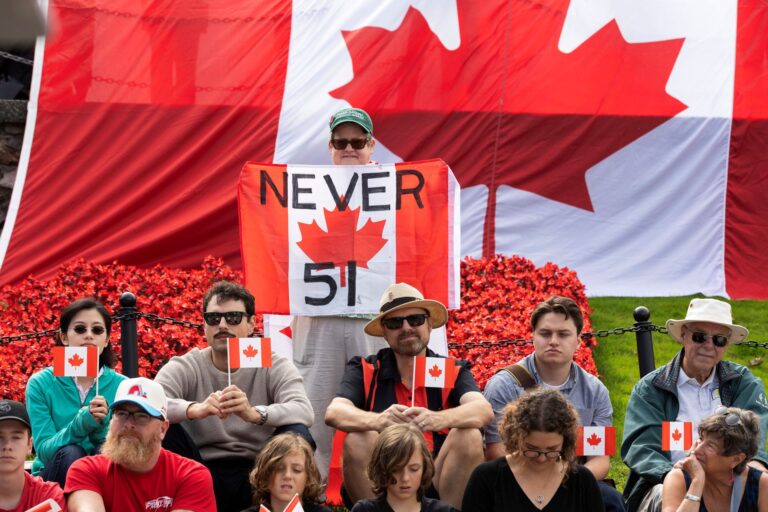
Canada-US relations: Over the past four years, the phenomenon of Canadian loathing for George W. Bush has been an interesting socio-political development. According to various polls, more than 60 percent of a hypothetical Canadian electorate would vote for John Kerry. That preference recognized, the choice could be characterized by the old maxim of being careful about what you wish for, as you may get it.
Thus, as already examined above, the likelihood of Senator Kerry rapidly withdrawing from Iraq, obtaining close cooperation from the United Nations or Old Europe, adhering to the Kyoto treaty, or endorsing the International Criminal Court appears minimal.
In specific bilateral affairs, the Democrat Party platform makes no mention of Canada. Senator Kerry personally has stressed a go-slow approach for resolving the BSE/mad cow issue. Canadians might hope that this position is election campaign boilerplate aimed at battleground states that are major beef producers. But the rhetoric could be real; so Canadians should not count on ending this crisis in the near term.
Those who rail against the US position in trade disputes such as softwood lumber might recall the level of protection extended to Quebec diary and poultry production. And while the Canadian Wheat Board is an icon for some in Western Canada, there are Canadians with prison records to attest to their conviction that the Wheat Board is a restraint on free market trade. In some of these trade complaints, it is a case of an ebony Canadian pot complaining about the hue of the US kettle.
Moreover, free trade in general may be in question under “President Kerry.” He has pledged to re-examine all trade agreements and fulminated against “Benedict Arnold corporations” that export jobs. Of course a good number of these exported jobs may be in Canada, and while NAFTA has not been ideal for Canada, neither has it been without advantage. Again, Canadians may take comfort in the fact that Senator Kerry persistently voted in favor of free trade and hypothesize that his campaign rhetoric is designed to play to union supporters. One could also recall that in the 1993 election, Chrétien spoke of renegotiating NAFTA and settled for much, much less than hoped for by leftwing Canadian nationalists. We can assume that Canadian diplomats are probing key Kerryites on the depth of the senator’s desire to review existing trade agreements.
But perhaps more basic, the election will not affect the US concern for post9/11 security. Our trading relationship is massive and mutually profitable, but security now trumps economics. If the border is not “smart”— and perceived to be such— the risk of vastly slowed movement of people and goods comes to the forefront. “President Kerry” no less than President Bush will demand that Canadians expend maximum efforts to prevent attacks by individuals, resident in Canada, hostile to the United States. In this regard, it remains disconcerting to see an apparently endless stream of individuals whose names change (Ressam, Khadr, Arar, etc.) but whose objectives do not. No comparable individuals are associated with Mexico. Nor do the 36,000 illegals in Canada subject to deportation but “missing” or the continuing weakness of Canadian passport security provide comfort.
In short, Canadians may feel disrespected that their views carry so little weight in a US election. And there may be other Canadians who would like their Canada to include the White House (and a right to exercise representation without taxation). But, in rejoinder, what role does the United States play in Canadian elections other than to be a scarecrow for denunciation by politicians who don’t want “US-style health care”? However, the best bottom-line bet for the November election is that its consequences and aftermaths will be both less and more than expected, but will require us to wait and see.